
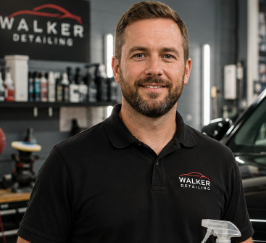
By James Walker · Car Detailing
Quick Answer:
The right car wax depends on your paint’s condition, your climate, and how much upkeep you want. Carnauba wax gives a warm, deep shine but fades faster. Synthetic polymer wax lasts longer and holds up better in heat and UV. For most daily-driven cars, a synthetic or hybrid wax is the easiest all-around choice.
Standing in the detailing aisle with five kinds of wax in your hands is a common problem. Every label promises “deep shine” and “long-lasting protection,” but not every wax works the same way on every car. This guide walks through how to choose car wax based on your paint type, your climate, and how often you’re realistically willing to apply it — so you’re not guessing at the store or wasting a product that isn’t built for your situation.
Paint Protection Basics
DIY Application Steps
Wax vs Sealant
Buying Mistakes
A quick note before you start: This article is for general educational and purchasing guidance only. It does not guarantee vehicle performance or safety outcomes and does not replace advice from a qualified mechanic or auto technician. Some tasks may require the work of a licensed or registered professional, or compliance with local vehicle regulations. Always check your vehicle’s manual, warranty terms, and current local regulations, and consult a qualified professional when needed.
What Car Wax Actually Does
Car wax is a thin protective layer applied over your paint’s clear coat. It is not a paint restorer — it will not remove scratches or fix faded paint on its own. What it does is fill in microscopic imperfections on the surface, add a layer of shine, and give the paint some resistance to sun, rain, and light contamination like dust or bird droppings. Choosing car wax that matches your paint condition and driving habits matters because a wax built for a garage-kept classic behaves very differently from one made for a car parked outside in strong sun every day.
For a vehicle owner, the payoff is mostly cosmetic and protective rather than mechanical. A good wax layer can make washing easier, since dirt and water bead up and slide off more readily. It will not stop rust, will not fix a chipped bumper, and will not replace bodywork after an accident. Understanding this upfront is the first step in learning how to choose car wax that fits what you actually need it to do.
How Different Car Wax Types Work
Most car wax on the market falls into three broad families. Natural carnauba wax comes from the leaves of the carnauba palm and is prized for a warm, glossy look, though it tends to break down faster under sun and rain. Synthetic polymer wax is lab-made and generally bonds more consistently to the clear coat, giving longer protection with less reapplication. Hybrid waxes blend carnauba with synthetic polymers to combine some of the shine with more durability. There are also ceramic-boosted spray waxes, which add a small amount of silica-based technology on top of a traditional wax formula — these are different from a full ceramic coating, which is a separate, more permanent product category.
Car Wax Types Compared
Durability figures are a practical guide based on typical conditions, not a guaranteed timeline — heat, washing frequency, and sun exposure all shift these numbers.
Older or Classic Paint
Single-stage or older paint often looks best with a carnauba or hybrid wax, since the warmer finish can hide fine paint fading better than a very glassy synthetic look.
Newer Clear Coat Paint
Modern clear coats generally respond well to synthetic polymer or hybrid waxes, which tend to bond evenly and hold up through more wash cycles.
Dark Paint Colors
Dark colors show swirl marks and haze more easily, so applying wax by hand with light pressure and a clean applicator pad is usually a safer approach than heavy machine buffing for beginners.
Cars Parked Outside
Vehicles that sit outside daily benefit more from synthetic or ceramic-boosted waxes, since these generally resist UV breakdown better than pure carnauba formulas.
How to Choose Car Wax Step by Step
Once you understand the wax types, choosing the right car wax comes down to matching a few simple factors to your situation. Here is a practical sequence to follow.
Check your paint’s condition. Run a hand over the hood in a clean, dry state. If it feels rough or gritty, a clay bar treatment before waxing will help the wax bond better.
Think about your climate. Hot, sunny regions favor synthetic or hybrid waxes with stronger UV resistance. Milder climates give more flexibility, including pure carnauba.
Decide how much time you want to spend. If reapplying wax every month sounds like a chore, lean toward a longer-lasting synthetic formula instead of natural carnauba.
Match the form to your skill level. Spray and liquid waxes are easier for beginners; paste waxes usually give more control but take longer to apply and buff off.
Confirm compatibility with any existing coating. If your car already has a ceramic coating or paint protection film, check the wax label — some formulas are made specifically to be safe as a topper.
In my testing experience, working through these five points before buying stops most of the guesswork that leads people to grab whatever bottle has the biggest “shine” claim on the label.
This process flow is a practical guide, not a scientific formula.
Choosing Car Wax: Decision Flow
Common Problems After Waxing (and Likely Causes)
Problem vs Likely Cause
Safety Considerations When Applying Car Wax
Waxing is generally a low-risk task compared with engine or electrical work, but a few habits keep it safer and protect your paint at the same time.
Safe Use vs Risky Use
Safety Decision Path
Common Mistakes When Choosing Car Wax
Mistake vs Better Choice
What Beginners Often Miss
New detailers tend to skip the wash-and-dry prep step and go straight to waxing, which traps dirt under the layer and can create fine scratches instead of protection.
What Experienced Owners Check
Experienced DIYers usually test water beading every few weeks as a simple sign of when it’s time to reapply, rather than waiting for the paint to look visibly dull.
Applicator Choice Matters
A soft foam or microfiber applicator spreads wax more evenly than a rag, reducing the chance of streaks and uneven coverage on curved panels.
Small Batches Work Better
Waxing one panel at a time, rather than the whole car at once, keeps the product from drying too hard to buff off cleanly.
Signs You Need to Reapply or Reconsider Your Wax
Red-Flag Checklist
Matching Car Wax to Your Vehicle Use
Wax Fit by Vehicle Use
Priority Meter: What Matters Most by Wax Type
A practical guide to typical priority, not scientific test data.
Carnauba — Shine depth
Synthetic Polymer — Durability
Hybrid — Balance of shine and durability
Spray/Ceramic Topper — Ease of application
Note: Reading the label’s paint and coating compatibility section takes thirty seconds and prevents most of the common regret people have after buying the wrong wax.
Tip: Keep a small notebook or phone note of the wax brand and date you last applied it. It makes deciding when to reapply far easier than guessing from memory.
Warning: Never apply wax to a hot panel or in direct sun. The wax can dry too fast to buff evenly and may leave hard-to-remove residue or light marring on the clear coat.
Safety Note: Some waxes contain solvents that can irritate skin or eyes with prolonged contact. Work in a ventilated area, avoid contact with eyes, and follow the manufacturer’s handling instructions on the label.
When to contact a professional: If your paint has deep scratches, visible clear-coat peeling, rust bubbling, or an unclear coating history, a professional detailer or auto body shop can evaluate the surface before any wax is applied. Waxing over damaged or unstable paint will not fix the underlying problem and may make it harder to see developing issues.
Recommended Products to Consider
This article may contain affiliate links. If you buy through these links, we may earn a small commission at no extra cost to you. We only mention products that are relevant to the topic and do not replace advice from a qualified mechanic or auto technician.
Carnauba Paste Wax
May support a warm, deep shine on garage-kept or show-condition paint and can make routine care checks part of a simple upkeep habit.
Synthetic Polymer Liquid Wax
Can help extend protection between applications for daily drivers and may make weekly washing routines a bit easier thanks to better water beading.
Ceramic-Boosted Spray Wax
May be useful as a quick top-up between full waxing sessions and can make day-to-day car care checks faster for busy owners.
Frequently Asked Questions
How do I know which car wax is right for my car?
Look at your paint’s condition, how often the car sits outside, and how much time you want to spend on upkeep. Older or show cars often suit carnauba, while daily drivers parked outside usually do better with a synthetic or hybrid wax.
Is carnauba wax better than synthetic wax?
Neither is universally better. Carnauba tends to give a warmer, deeper shine but wears off faster. Synthetic wax usually lasts longer and holds up better to sun and washing, which makes it a common pick for everyday cars.
How often should I apply car wax?
Most waxes last around 4 to 12 weeks depending on the type, your climate, and how often the car is washed. A simple water-beading check is an easy way to judge when it’s time to reapply.
Can I wax a car with a ceramic coating?
Only if the wax label specifically states it is safe as a topper for coated surfaces. Some waxes can dull or interfere with a ceramic coating’s finish, so checking compatibility first is important.
Do I need to wash my car before waxing it?
Yes. Waxing over dirt or road grime can trap particles against the paint and cause fine scratches. A wash, and a clay bar treatment if the paint feels rough, gives the wax a clean surface to bond to.
Is spray wax as good as paste wax?
Spray wax is generally faster and easier to apply but often doesn’t last quite as long as a paste wax. It works well as a quick refresh between full paste or liquid wax applications.
When should I take my car to a professional instead of waxing it myself?
If you notice deep scratches, peeling clear coat, rust spots, or you’re unsure about the paint’s history, a professional detailer or body shop can check the surface before any product is applied.
Final thoughts: Learning how to choose car wax comes down to matching the product to your paint, your climate, and how much time you’re willing to spend on upkeep. A simple, well-matched wax applied consistently will usually outperform an expensive one used carelessly. For anything beyond routine waxing — deep scratches, coating issues, or paint damage — check your vehicle’s manual and consult a qualified mechanic or professional detailer, and always confirm any product or process against your local vehicle regulations before making permanent changes to your car’s exterior.
Further reading: EPA Safer Choice program for guidance on lower-hazard cleaning and car care products, and the FTC Green Guides for understanding environmental marketing claims on car care products.
