This guide takes you on a journey through the history of the car stereo, covering every major milestone from vacuum tubes to streaming audio. You will discover how technological innovations transformed our vehicles into mobile concert halls. Learn about the legendary brands and formats that defined the driving experience for generations.
Have you ever wondered how we went from silence to surround sound in our vehicles? The car stereo is a staple of modern life. We use it for morning commutes. We use it for long road trips. It keeps us awake, informed, and entertained. But the road to the modern car stereo was long and bumpy. In this guide, you will learn about the fascinating history of car audio. We will look at the machines, the formats, and the people who made it all possible.
Key Takeaways
- The First Radio: The first mass-produced car stereo was the Motorola 5T71, released in 1930.
- FM Evolution: Blaupunkt introduced the first FM car radio in 1952, offering much better sound quality.
- Tape Formats: The 1960s and 70s saw a battle between the 8-track tape and the more compact cassette.
- The CD Revolution: Compact discs arrived in cars in the mid-1980s, bringing digital clarity to the road.
- Modern Integration: Today’s car stereo systems rely on Bluetooth, smartphones, and high-resolution touchscreens.
Step 1: The Early Days of Vacuum Tubes (1920s – 1930s)
In the early 1920s, radios were huge. They were the size of small refrigerators. Putting one in a car seemed impossible. However, hobbyists began to experiment. They would strap home radios into their back seats. They used massive batteries to power them. These early setups were dangerous and clunky. They often interfered with the car’s engine. If you wanted a car stereo back then, you had to be a tinkerer.
The Birth of Motorola
The real change happened in 1930. Two brothers named Paul and Joseph Galvin saw an opportunity. They worked with William Lear to create a radio specifically for cars. They called it the Motorola. The name combined “motor” and “victrola.” This unit was the first successful commercial car stereo. It was very expensive. It cost about 130 dollars. In those days, that was nearly a quarter of the price of a new car! It used vacuum tubes and required a large antenna. Despite the cost, people loved it. It brought the world into the cabin of the car.
Solving the Noise Problem
Early car stereo units had a big problem. The engine’s spark plugs created static. This made the music hard to hear. Engineers had to find ways to “shield” the radio. They developed better wiring and suppressors. This was the first time people realized that a car is a very difficult place for audio. You have a moving engine, wind noise, and limited space. These challenges drove innovation for decades to come.
Step 2: The Transition to FM and Better Sound (1940s – 1950s)
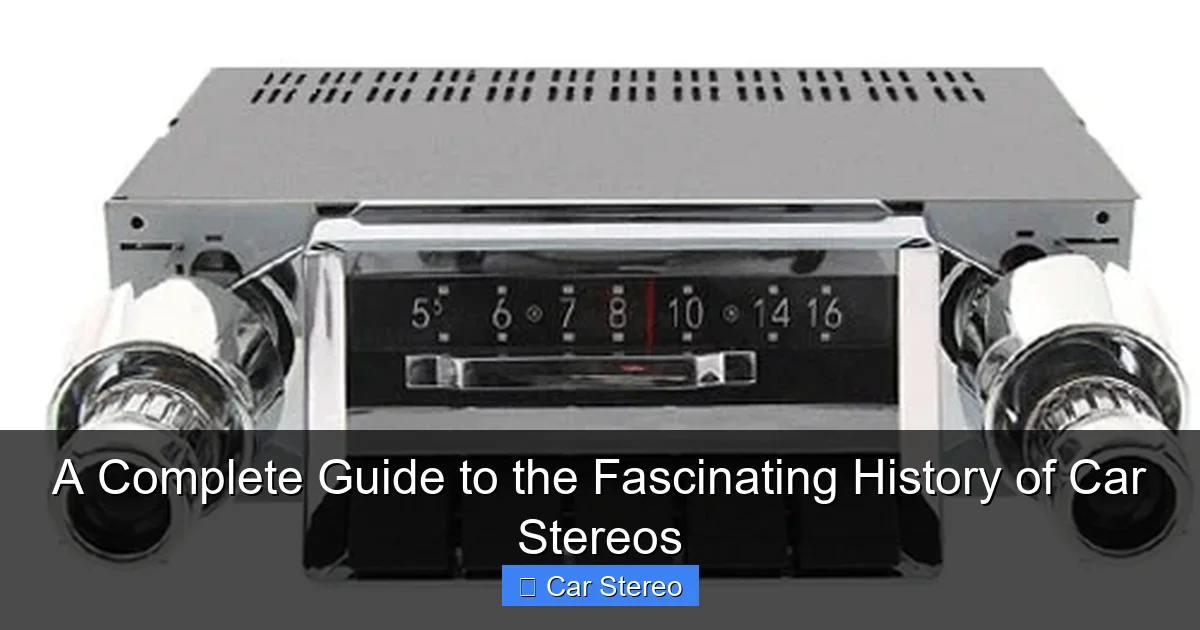
After World War II, technology moved fast. People wanted more than just news and weather. They wanted high-fidelity sound. Most early car stereo units only picked up AM stations. AM radio can travel long distances, but it sounds thin. It also picks up a lot of interference from storms and power lines.
Visual guide about A Complete Guide to the Fascinating History of Car Stereos
Image source: classiccarstereos.com
The Blaupunkt Breakthrough
In 1952, a German company called Blaupunkt changed the game. They introduced the first FM car radio. FM offered much clearer sound. It allowed for a wider range of musical tones. However, FM signals do not travel as far as AM signals. Drivers found that they would lose their favorite stations as they drove between towns. Because of this, many car stereo units featured both AM and FM bands. This became the standard for many years.
The Chrysler Highway Hi-Fi
In the mid-1950s, Chrysler tried something bold. They wanted drivers to be able to pick their own music. They introduced the “Highway Hi-Fi.” It was a tiny record player built into the dashboard. It played special 7-inch discs. While it was a cool idea, it was a failure. The needles would skip every time the car hit a bump. It was also very hard to change records while driving. It proved that drivers wanted “on-demand” music, but records were not the answer.
Step 3: The Era of Magnetic Tape (1960s – 1970s)
The 1960s brought the biggest shift in car stereo history. This was the age of magnetic tape. For the first time, you didn’t have to listen to whatever the DJ chose. You could be your own DJ. This changed the culture of driving forever. It made the car a private space for personal expression.
Visual guide about A Complete Guide to the Fascinating History of Car Stereos
Image source: classiccarstereos.com
The 8-Track Revolution
In 1965, the 8-track tape player arrived. It was developed by Bill Lear (the same man who helped start Motorola). Ford began offering 8-track players in their high-end models. The 8-track was great because it was sturdy. You could shove a cartridge into the slot and music would play instantly. It had four “programs” of two tracks each. The main downside was that the tape would often switch tracks in the middle of a song. You would hear a “clunk” sound, and the song would fade out and then fade back in. Still, it was the king of the car stereo world for nearly a decade.
The Rise of the Compact Cassette
While the 8-track was popular, the cassette tape was waiting in the wings. Philips had invented the cassette in 1962. At first, it was only used for voice recordings. The sound quality was poor. But by the 1970s, tape quality improved. Cassettes were much smaller than 8-tracks. You could fit dozens of them in your glove box. They also allowed you to “rewind” and “fast-forward” easily. By the late 70s, the cassette had won the war. Every new car stereo came with a cassette deck. This led to the famous “mixtape” culture.
Step 4: The Digital Dawn and the CD (1980s – 1990s)
As the 1980s began, audio went digital. People were tired of tapes getting tangled or melting in the summer sun. They wanted “perfect” sound. This led to the invention of the Compact Disc, or CD. The CD promised a noise-free experience with incredible dynamic range.
Visual guide about A Complete Guide to the Fascinating History of Car Stereos
Image source: classiccarstereos.com
Sony and the First In-Dash CD Player
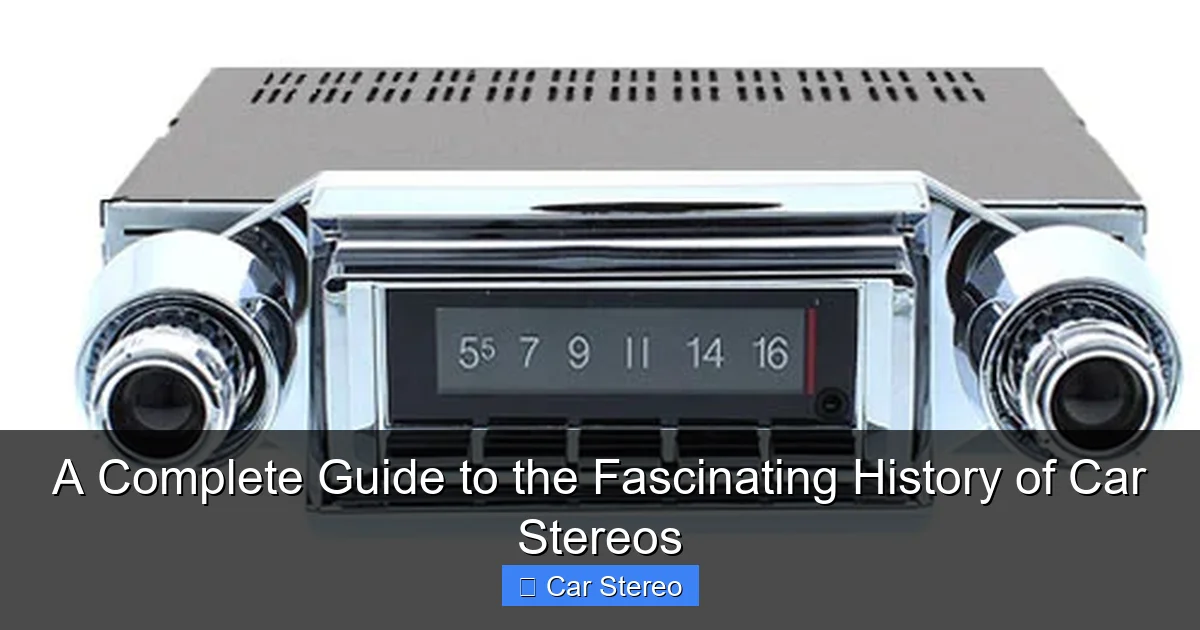
Sony released the first in-dash CD player, the CDX-5, in 1984. It was a luxury item. Early CD players in cars had a familiar problem: skipping. Just like the old record players, a pothole could make the music stop. Engineers solved this by creating “electronic shock protection.” This technology used a buffer to store a few seconds of music. If the laser skipped, the music kept playing from the memory. This made the CD car stereo reliable for daily driving.
The Multi-Disc Changer
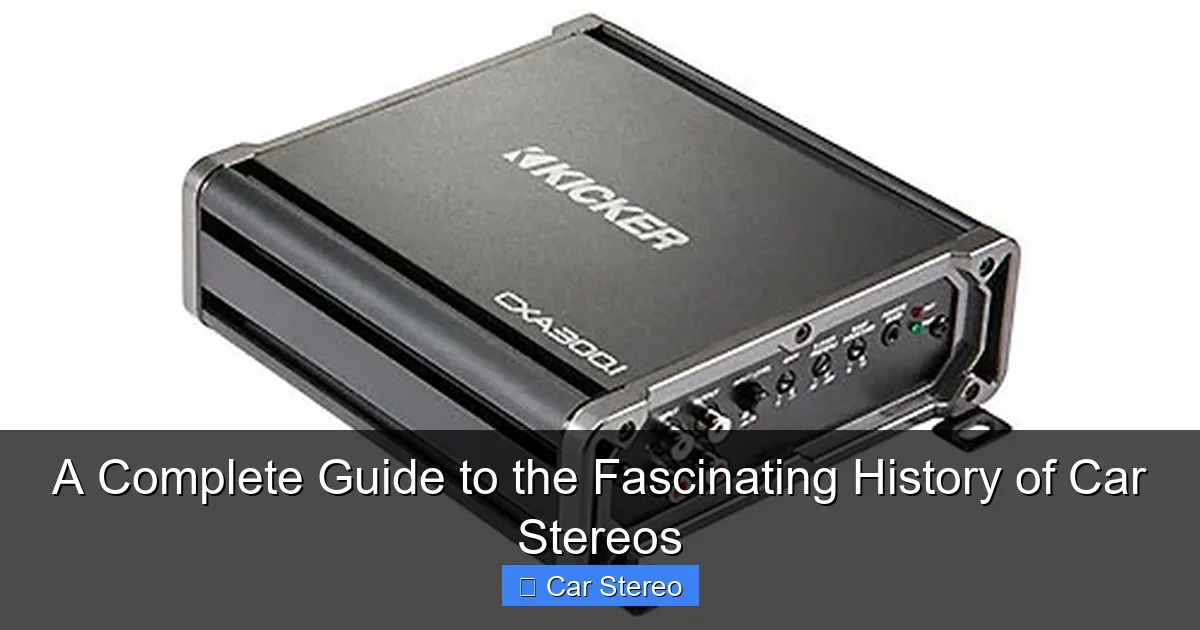
In the 1990s, the “CD changer” became a status symbol. These were large units hidden in the trunk or under a seat. They could hold 6, 10, or even 12 discs. You could control them from your main car stereo head unit. This allowed for hours of music without ever touching a disc. During this time, the aftermarket car stereo industry exploded. Brands like Pioneer, Kenwood, and Alpine became household names. People began spending thousands of dollars on subwoofers, amplifiers, and custom speakers.
Step 5: The MP3 and Connectivity Era (2000s)
At the turn of the millennium, physical media started to vanish. The MP3 file changed everything. Suddenly, you could fit 1,000 songs on a device smaller than a deck of cards. The car stereo had to adapt to this new digital world. This era was defined by how we connected our devices to our cars.
The Auxiliary Jack and USB
The first solution was the simple “Aux” jack. It allowed you to plug your iPod or MP3 player directly into the car stereo. Later, USB ports became standard. A USB connection was better because it also charged your phone. It also let you see song titles on the radio screen. Some car stereo units even had internal hard drives. You could “rip” your CDs directly to the car’s memory. This was a short-lived trend, as phones soon became the primary storage for music.
The Arrival of Bluetooth
Bluetooth technology was a massive milestone. It removed the need for wires. At first, Bluetooth was only for hands-free calling. It sounded terrible for music. But by the late 2000s, “A2DP” streaming became common. This allowed high-quality music to flow from your phone to your car stereo wirelessly. It made getting into the car and starting your music a seamless experience. You no longer had to fumble with cords before pulling out of the driveway.
Step 6: The Modern Smart System (2010s – Present)
Today, the car stereo is no longer just a radio. It is a computer. We call these “Infotainment Systems.” They control your music, your navigation, and even your car’s climate settings. The physical buttons are mostly gone, replaced by large glass touchscreens.
Apple CarPlay and Android Auto
The biggest shift in recent years is the integration of smartphones. Apple CarPlay and Android Auto allow your phone to take over the car stereo screen. You get a familiar interface with your favorite apps like Spotify, Waze, and Pandora. This solved the problem of clunky factory navigation systems. It also ensures that your car stereo stays up to date. As long as your phone is new, your car’s software feels new too.
High-Resolution Audio and Streaming
Modern cars are now designed with “sound stages” in mind. High-end brands like Burmester, Bose, and Revel work with car makers from the start. They use dozens of speakers and digital signal processing (DSP) to create an immersive experience. We also have satellite radio (SiriusXM) and high-res streaming services. You can now listen to studio-quality music while sitting in traffic. The car stereo has truly become a high-end home theater on wheels.
Practical Tips for Upgrading Your Car Stereo
If you have an older vehicle, you don’t have to settle for old technology. Upgrading a car stereo is one of the best ways to improve your driving life. Here are some tips to get started:
- Identify Your Size: Most cars use “Single-DIN” (2 inches tall) or “Double-DIN” (4 inches tall) units. Knowing this helps you pick a replacement that fits.
- Prioritize Connectivity: If you are buying a new head unit, look for “Wireless CarPlay” or “Wireless Android Auto.” It makes a huge difference in convenience.
- Don’t Forget the Speakers: A great car stereo can only do so much with cheap factory speakers. Even an entry-level set of aftermarket speakers will sound much better.
- Use a Wiring Harness: Never cut your car’s original wires. Buy a wiring harness adapter. It allows you to plug the new car stereo directly into the existing factory plug.
- Add a Small Subwoofer: You don’t need to shake the windows. A small, under-seat subwoofer adds “fullness” to the music that standard speakers cannot reach.
Troubleshooting Common Car Stereo Issues
Is your music acting up? Here are a few things to check before you head to a repair shop.
No Power to the Unit
If your car stereo won’t turn on, check the fuse first. Most cars have a dedicated fuse for the radio. You can find this in the fuse box under the dashboard or under the hood. If the fuse is blown, replace it with one of the same amperage. If it blows again, you may have a short circuit in your wiring.
Static or Poor Reception
If your AM/FM stations are fuzzy, check the antenna connection. The cable can sometimes wiggle loose from the back of the car stereo. Also, check for “ground loops.” If you hear a whining noise that gets louder when you rev the engine, your ground wire might be loose. A clean, tight ground connection is essential for clear audio.
Speakers Cutting Out
If one speaker works sometimes and then stops, it is usually a loose wire. Check the connection at the back of the speaker itself. In older cars, the wire that passes through the door hinge can break over time. This happens because the door opens and closes thousands of times. You may need to run a new wire to that door.
Conclusion
The history of the car stereo is a story of human ingenuity. We have always wanted to take our favorite sounds with us. We moved from fragile vacuum tubes to sturdy tapes. We went from skipping CDs to invisible digital files. Each step was driven by our desire for better quality and more control. Today, our cars are more than just transportation. They are our private concert halls, our newsrooms, and our connection to the world. As we move into the future of electric and autonomous cars, the car stereo will only become more important. It will remain the heart of the driving experience, providing the soundtrack to our lives on the open road.
🎥 Related Video: What Is The History Of Car Radios? – The Collectibles Guide
📺 The Collectibles Guide
What Is The History Of Car Radios? In this informative video, we’ll take you through the intriguing history of car radios. Discover …
