

Wire the stereo by matching power, ground, ignition, and speaker wires directly to car wiring.
I’ve wired many stereos without a harness and I’ll walk you through how to wire car stereo without harness step by step. This guide is clear, safe, and hands-on, with tools, wire colors, testing tips, and real-life lessons to help you finish the job right.

Tools and materials you’ll need
You can wire a car stereo without harness with basic tools. Gather everything before you start.
- Multimeter for voltage and continuity checks.
- Wire strippers and crimpers for neat connections.
- Soldering iron and solder for permanent joints.
- Heat-shrink tubing or quality electrical tape.
- Butt connectors or solder sleeves.
- Ring terminal for solid ground.
- Inline fuse or fuse tap for the stereo power feed.
- Wiring diagram for your car or a service manual.
These tools keep wiring safe and reliable when you wire car stereo without harness.
Safety first: precautions before you begin
Safety matters when you wire car stereo without harness. Take these steps.
- Disconnect the negative battery terminal to avoid shorts.
- Work in a well-lit, ventilated area.
- Use an inline fuse on the constant 12V feed.
- Double-check wires with a multimeter before connecting.
I always remove the battery negative and test each wire twice. That simple habit prevented a burned head unit and saved me time.
Step-by-step: how to wire car stereo without harness
Follow these steps slowly. Short checks reduce mistakes.
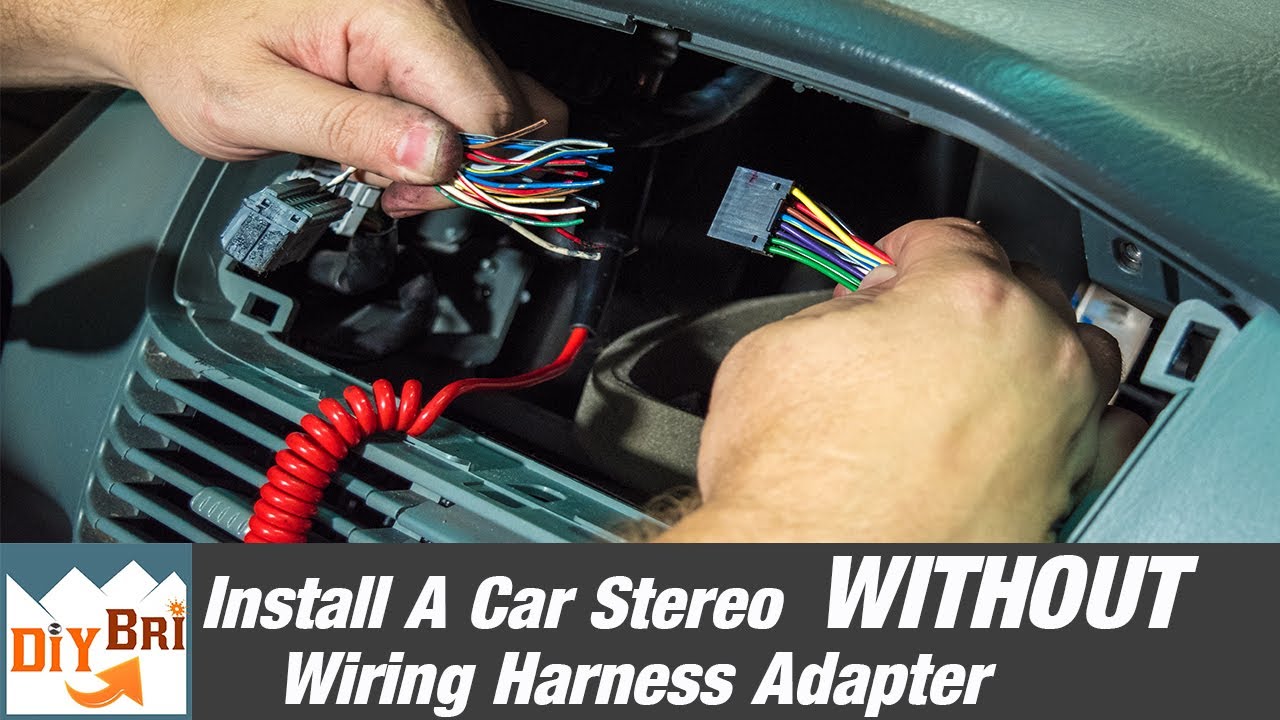
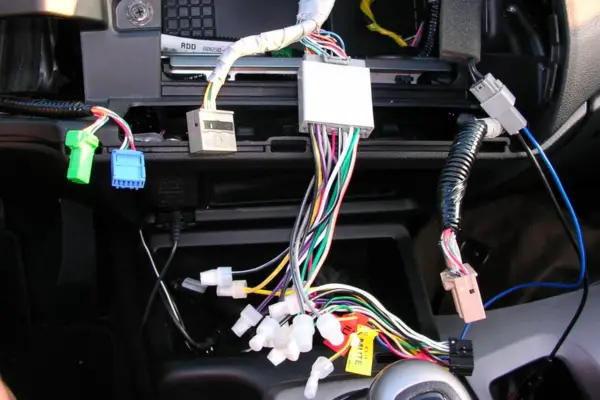
- Remove the old stereo and access the factory wiring harness.
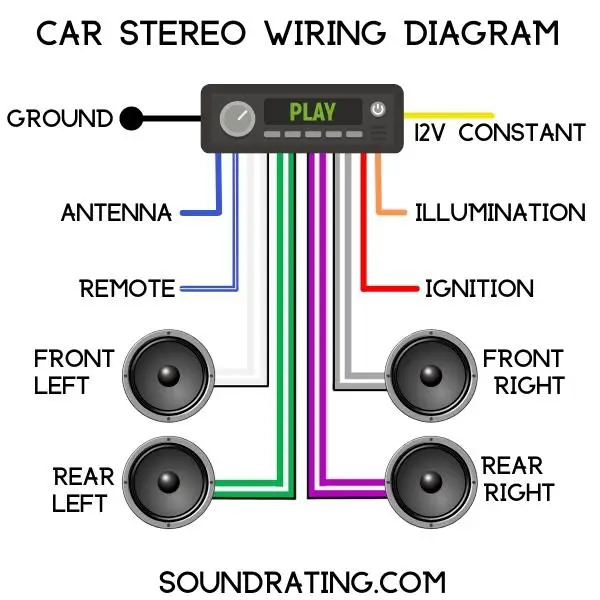
- Identify the key wires: constant 12V (battery), switched 12V (ACC/ignition), ground, speaker wires, and antenna/illumination.
- Test each suspect wire with a multimeter to confirm function. Mark them with tape.
- Connect the constant 12V to the stereo’s yellow wire through an inline fuse.
- Connect the ACC (switched 12V) to the stereo’s red wire so the unit turns on with ignition.
- Attach a clean metal ground to the stereo’s black wire using a ring terminal.
- Match speaker wires: front-left, front-right, rear-left, rear-right, ensuring polarity (+ and -) is correct.
- Connect antenna power and illumination wires if needed.
- Secure all connections with solder or crimp connectors and cover with heat-shrink tubing.
- Reconnect the battery and test power, radio playback, and speaker output at low volume.
Keep wire runs neat. Zip-tie loose wiring and avoid sharp metal edges. If something fails, unplug and recheck step by step.
Wire color guide and common pinouts
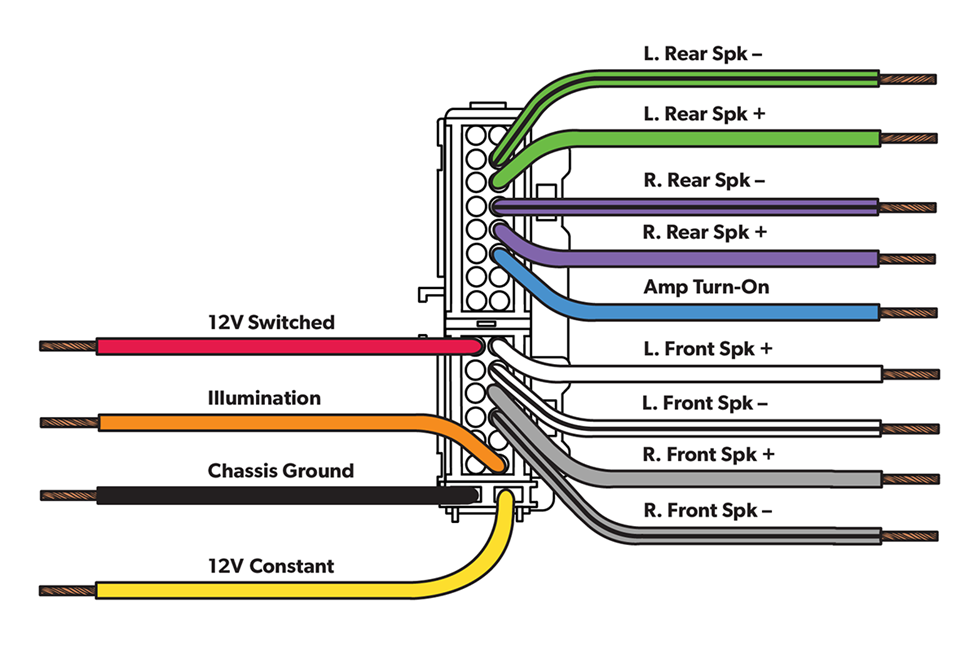
Car makers use different colors. Here are common signals and typical wire colors, but always test.
- Constant 12V (battery): often yellow
- Switched 12V (ACC/ignition): often red
- Ground: black
- Speaker positive and negative: usually white, gray, green, purple (and their stripes)
- Antenna power: blue or blue/white
- Illumination/dimmer: orange or orange/white
- Remote turn-on (amp): blue/white
I once wired a unit where the ACC was brown. Testing solved it. When you wire car stereo without harness, treat color guides as hints, not rules.

Troubleshooting common problems
If the stereo won’t turn on or speakers are silent, use this checklist.
- No power: Check battery connection and inline fuse.
- No switched power: Verify ACC wire with a multimeter while ignition is on.
- No sound: Confirm speaker wires and polarity are correct.
- Blowing fuses: Look for a shorted wire or incorrect connection.
- Static or noise: Ground properly and route speaker wires away from power cables.
Test each function separately. I often bench-test speakers before final installation to save time.
Tips, tricks, and personal experience
A few things I learned the hard way when I wire car stereo without harness.
- Label every wire with tape and a marker. It saves confusion.
- Solder connections when possible. Crimps can work but solder lasts longer.
- Use heat-shrink tubing over tape for a tidy, durable finish.
- Keep factory plugs intact. If you need the car later, the factory harness helps resale.
- If the car has an airbag or steering wheel controls, consult a wiring diagram or pro.
One project took longer because I didn’t bench-test speaker channels. Do that first. It prevents repeated trim removal.
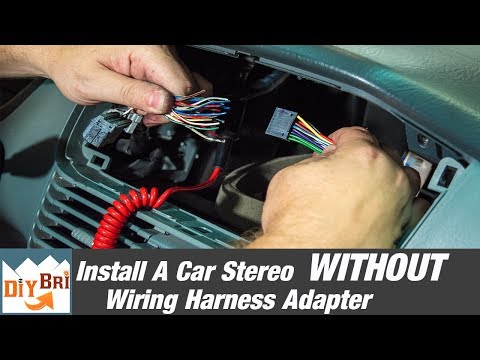
Alternatives and when to use a harness adapter
A harness adapter simplifies wiring and preserves the factory plug. Consider these options.
- Use a vehicle-specific harness adapter to plug into the factory socket.
- Buy an RCA harness adapter for amplified factory systems.
- Seek professional help for complex factory amps, CAN-BUS, or steering wheel controls.
When you wire car stereo without harness, know your limits. For modern cars with CAN lines and factory amps, an adapter or pro is usually better.
:max_bytes(150000):strip_icc()/GettyImages-570258697-56a1051b3df78cafdaa7eeca.jpg)
Frequently Asked Questions of how to wire car stereo without harness
How do I find the constant 12V wire in my car?
Use a multimeter set to 12V and test wires with the ignition off. The constant 12V wire will show battery voltage even when the key is removed.
Can I use electrical tape for all connections?
Electrical tape works short term but can fail. Solder and heat-shrink give a more durable, weatherproof bond and are recommended.
What if my speaker wires are shorted or damaged?
Replace or repair damaged wire runs. Use proper gauge speaker wire and check for pinched spots near door hinges or sharp edges.
Do I need to program steering wheel controls after wiring?
Most steering wheel controls require a separate interface or adapter. Wiring the stereo alone won’t restore those controls on most cars.
Is it safe to wire without a harness on a modern car?
It can be safe for simple systems but risky on cars with CAN-BUS, factory amps, or complex electronics. Use adapters or pro help for modern vehicles.
Conclusion
Wiring a car stereo without harness is doable with the right tools, patience, and testing. Follow safety steps, identify wires with a multimeter, and make durable connections using solder and heat-shrink. If your car uses modern electronics, consider an adapter or professional help to avoid damage.
Try the steps on a low-risk stereo first. If this guide helped, share your project photos or ask a question below to get specific tips.