
Finding the right head unit is easy when you know the year, make, and model of your vehicle. This guide helps you understand DIN sizes, dash kits, and wiring harnesses to ensure a perfect fit. Use our simple steps to upgrade your ride with modern features like Apple CarPlay and Android Auto without any guesswork.
Do you want to upgrade your car audio? You might want a bigger screen. You might want to use Apple CarPlay. Perhaps your old radio just stopped working. One big question stops most people. That question is, “what car stereo fits my car?”
Finding the right fit feels like a puzzle. Every car is different. Dashboards have different shapes. The wiring can be complex. However, you do not need to be an expert. You just need the right steps. This guide will show you exactly how to find the perfect match. We will keep it simple. We will keep it fast. Let’s get started.
Key Takeaways
- Size Matters: Determine if your car uses a single-DIN (2 inches tall) or double-DIN (4 inches tall) stereo.
- Vehicle Data: Keep your car’s year, make, model, and trim level ready for accurate fitment results.
- Dash Kits are Essential: Most cars require a specific plastic dash kit to make an aftermarket stereo look factory-installed.
- Wiring Harnesses Save Time: Avoid cutting factory wires by using a vehicle-specific wiring adapter for a “plug and play” experience.
- Check for Depth: Always measure the depth of your dashboard cavity to ensure the new stereo has enough room for wires and connectors.
- Integration Modules: If you have steering wheel controls or a factory amp, you will need a special interface module to keep them working.
Step 1: Understand the Basic Sizes (DIN)
The first thing to learn is the word “DIN.” This stands for Deutsches Institut für Normung. It sounds fancy. It is just a standard size for car radios. Almost every car uses one of two sizes. Knowing your size is the first step to answering “what car stereo fits my car.”
Single-DIN Stereos
A single-DIN stereo is the standard small size. It is 2 inches tall. It is 7 inches wide. These were very common in older cars. Many people like them because they are simple. If your car has a narrow slot, it is likely a single-DIN. Sometimes, you can even put a single-DIN into a larger hole using a pocket kit. This gives you extra storage space for your phone or sunglasses.
Double-DIN Stereos
A double-DIN stereo is twice as tall. It is 4 inches tall. It is still 7 inches wide. Most modern cars use this size. These units often have large touchscreens. They look like a small tablet in your dash. If your current radio has a big screen, you likely need a double-DIN unit. These are great for maps and backup cameras. They make your car feel much newer.
What if I have an unusual size?
Some cars do not follow these rules. Some luxury cars have custom-shaped radios. Some very old cars have “shaft-style” radios. These have two knobs on the sides. If you have an odd shape, do not worry. There are still ways to make things fit. Special kits can adapt these odd shapes to standard sizes.
Step 2: Gather Your Vehicle Information
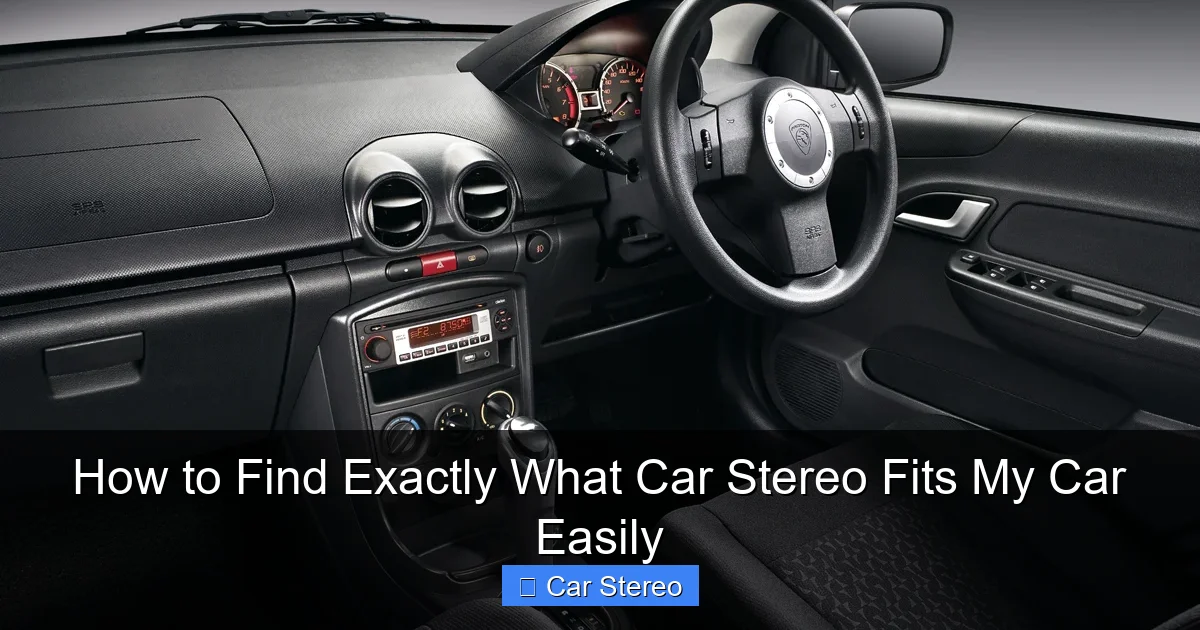
You cannot search for a stereo without the right details. You need to be specific. A 2015 Honda Civic is not the same as a 2015 Honda Accord. Even the trim level matters. Is it an LX or an EX? Does it have the premium sound system?
Visual guide about How to Find Exactly What Car Stereo Fits My Car Easily
Image source: s3.caradvice.com.au
To find exactly what car stereo fits my car, write down these four things:
- Year: The year your car was manufactured.
- Make: The brand (Ford, Toyota, BMW).
- Model: The name of the car (F-150, Camry, 3-Series).
- Trim/Options: Does it have a factory navigation system? Does it have a Bose or JBL logo on the speakers?
Knowing if you have a “premium” sound system is vital. These systems often use external amplifiers. This changes how you connect the new stereo. If you get the wrong part, you might get no sound at all. Check your door speakers for logos. Check your trunk for a subwoofer. These are clues that you have a premium system.
Step 3: Use Online Fitment Tools
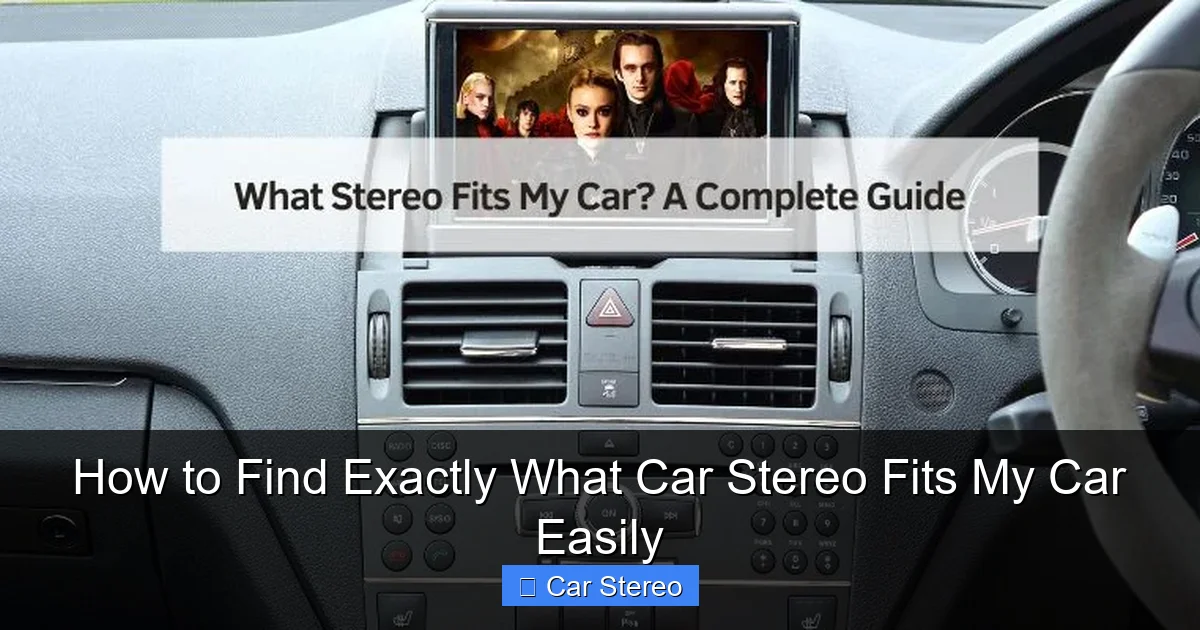
The easiest way to answer “what car stereo fits my car” is to use a database. There are many websites that have done the work for you. They have measured thousands of cars. They know what fits and what does not.
Visual guide about How to Find Exactly What Car Stereo Fits My Car Easily
Image source: thedailyautomotive.com
Go to a site like Crutchfield or Sonic Electronix. Look for a tool called “Find What Fits.” You will enter your year, make, and model. The website will then filter all their products. It will only show you radios that physically fit your dash. This saves you hours of reading manuals. It is the most reliable way for beginners to shop.
These tools also tell you what extra parts you need. Buying the radio is only half the battle. You will almost always need a dash kit and a wiring harness. These websites usually bundle them together for you. This ensures everything works the first time you try to install it.
Step 4: Check the Mounting Depth
Most people look at the height and width. They forget about the depth. The “chassis” is the part of the radio that goes into the dash. Some radios are very deep. This is because they have CD players inside. CD players take up a lot of room.
Visual guide about How to Find Exactly What Car Stereo Fits My Car Easily
Image source: m.media-amazon.com
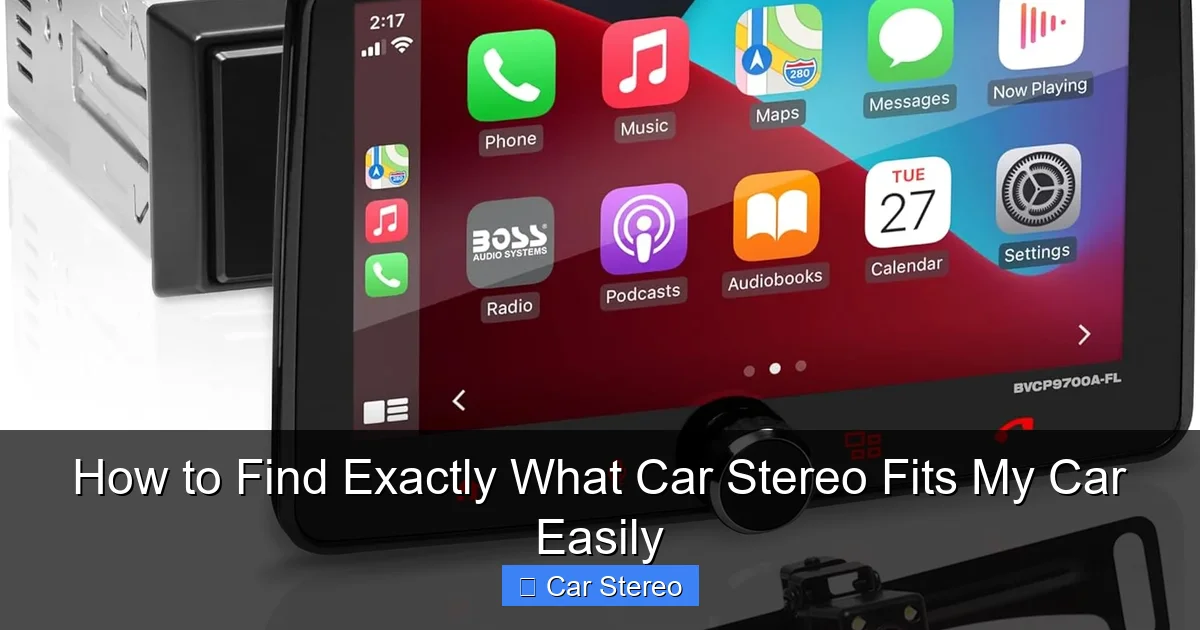
Modern “mech-less” stereos are very thin. They do not play CDs. They only use Bluetooth or USB. These are great for cars with shallow dashboards. Before you buy, check how much room is behind your factory radio. If there are air vents or metal braces in the way, a deep radio will not fit. You don’t want to get halfway through an install and realize the radio sticks out an inch.
Always measure from the front of the dash to the back of the cavity. If you have 6 inches of space, buy a radio that is 5 inches deep. You need that extra inch for the wires. Wires take up more space than you think. You have to tuck them in carefully.
Step 5: Select the Right Dash Kit
Your factory radio is shaped to match your car’s interior. Aftermarket radios are rectangular bricks. They do not match your car’s curves. This is why you need a dash kit. A dash kit is a plastic frame. It snaps into your car. It then holds the new radio in place. It fills the gaps so the install looks professional.
When asking “what car stereo fits my car,” the dash kit is the bridge. There are two main types of kits:
- Basic Kits: These are simple black plastic frames. They are cheap and functional.
- Integrated Kits: These are for cars where the radio and climate controls are one piece. These kits include new buttons for your heater and AC. They are more expensive but necessary for many modern cars.
Make sure the kit matches your interior color. Some kits come in silver, tan, or wood grain. Most come in matte black. Choosing the right color helps the new stereo look like it belongs there. It helps the resale value of your car later on.
Step 6: Plan Your Wiring and Integration
The physical fit is the easy part. The electrical fit is where things get tricky. You do not want to cut your car’s factory wires. If you cut them, you might cause a short circuit. It also makes it very hard to put the old radio back in later.
The Wiring Harness
To find what car stereo fits my car electrically, you need a wiring harness. This is a set of wires with a plug on one end. That plug fits into your car’s factory port. You then connect the other end to your new stereo. You can do this on your kitchen table. You use crimp connectors or solder. Then, you just plug it into the car. It is safe and clean.
Steering Wheel Controls
Does your car have buttons on the steering wheel? Do you want to keep using them? Most aftermarket stereos will not talk to these buttons automatically. You will need a steering wheel control (SWC) interface. This is a small box that translates the car’s signals for the new radio. Many modern harnesses now include this box. Check the description carefully before you buy.
Backup Cameras and Features
If your car has a factory backup camera, you want to keep it. You will need a special adapter to plug the factory camera into the new radio. The same goes for factory USB ports or AUX jacks. If you want to use the ports already in your dash, you need the right adapters. Planning this now prevents a headache later.
Step 7: Check for “Hidden” Obstacles
Sometimes a radio “fits” but has issues. For example, some double-DIN radios have screens that tilt. If your dash has a lip or a trim piece above the radio, the screen might hit it. This can break the motor in the radio.
Another issue is the “floating screen” style. These are huge 9-inch or 10-inch screens. They sit in front of the dash. They look cool. But they might block your air vents. They might block your hazard light button. Before buying a floating screen, hold a piece of cardboard the same size up to your dash. See what it covers. If it blocks your AC vents, you might be very unhappy in the summer.
Step 8: Troubleshooting Common Fitment Issues
Even with the best planning, problems happen. Here are a few common issues and how to fix them:
The radio is too loose
If the radio wobbles, check your mounting brackets. Most dash kits come with plastic brackets. Sometimes, using the metal brackets that came with the radio is better. Make sure all screws are tight. If there is still a gap, you may need a different trim ring. Most stereos come with a thin plastic border called a trim ring. Try putting it on or taking it off.
The radio won’t slide all the way in
This is usually caused by wires. The wires get bunched up behind the radio. They act like a spring. They push the radio back out. To fix this, reach through the side or bottom of the dash if you can. Pull the wires down as you slide the radio in. You can also use zip ties to make the wire bundles smaller. Never force the radio. If you push too hard, you might crush a wire or break a connector.
The steering wheel buttons work backwards
This happens if the interface box is not programmed correctly. Most boxes have “dip switches.” These are tiny switches you flip with a pen. Check the manual for your car’s specific settings. You might have to reset the box and try again. It is a common mistake and easy to fix.
Conclusion
Finding “what car stereo fits my car” does not have to be stressful. You just need to follow a process. Start with the size. Determine if you need a single or double-DIN unit. Then, get your vehicle’s specific details. Use a trusted online fitment tool to narrow your choices. Do not forget the “unseen” parts. You need a dash kit for the look and a wiring harness for the power.
Think about the depth of your dash. Think about your steering wheel buttons. If you plan for these things, your installation will go smoothly. You will end up with a great-looking stereo. It will have all the features you want. You will feel proud of the work you did. Now, go find that perfect stereo and enjoy the music!
🎥 Related Video: Eonon portable car stereo with wireless CarPlay & Android Auto. Fits various cars. #carstereo
📺 Eonon Official
This is Eonon portable car stereo with wireless CarPlay & Android Auto. More latest portable car stereos: …
