
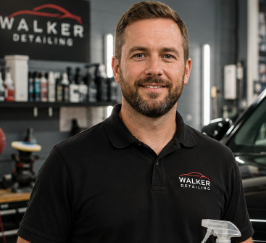
Written by James Walker | Category: Ceramic Coating Care
If you have ever wondered what is a car ceramic coating and whether it is worth the cost, you are not alone. It is one of the most talked-about car care upgrades, but also one of the most misunderstood. This guide breaks down what a car ceramic coating actually does, how it is applied, how to care for a coated car, and when it makes sense to hire a professional instead of doing it yourself.
Hydrophobic Coating
DIY vs Professional
Coating Maintenance
Durability
What Is a Car Ceramic Coating, Exactly?
A car ceramic coating is a liquid product made mostly of silica-based (SiO2) or similar nanoparticle chemistry. When applied to clean, prepped paint, it cures into a thin, semi-permanent layer that chemically bonds to the clear coat instead of just sitting on top like wax. Once cured, this layer behaves a bit like a very thin, flexible sheet of glass sitting on your paint.
In simple terms, a car ceramic coating is not paint, and it is not a substitute for bodywork. It is an added protective and cosmetic layer. It matters for daily drivers, weekend cars, and even fleet vehicles because it changes how water, dirt, and light chemical residue interact with the paint surface.
For a beginner, the easiest way to think about a ceramic coating is as an upgraded, longer-lasting version of wax that also adds noticeable gloss and much stronger water beading. For an experienced car owner, the real value is in reduced binding of dirt and grime to the surface, which can make regular washing faster and gentler on the paint.
Why Ceramic Coating Matters for Your Vehicle’s Paint
Paint on a modern vehicle is exposed to sun, road grime, bird droppings, tree sap, light industrial fallout, and repeated washing. Over years, this can dull the clear coat and make the paint harder to keep clean. A ceramic coating can help by adding a sacrificial, chemically resistant layer that takes some of that exposure instead of the clear coat itself.
For an older vehicle with paint that has already lost some gloss, a ceramic coating will not restore damaged paint on its own — a paint correction step (polishing) is usually needed first. For a newer vehicle, applying a coating early can help protect the factory clear coat while it is still in good condition. In either case, a ceramic coating is a maintenance-friendly product, not a repair product.
If ignored, or if a coating is applied over neglected paint, the results can be uneven: streaking, poor bonding, or a coating that looks patchy instead of glossy. A beginner can check paint condition simply by running a clean microfiber cloth or a plastic bag over the surface after washing — if it feels rough or gritty, the paint likely needs decontamination before any coating is applied.
How Ceramic Coating Works (Beginner-Friendly Chemistry)
Most consumer and professional ceramic coatings use a silica- or quartz-based formula suspended in a carrier solvent. When the product is wiped onto clean paint, the solvent evaporates and the silica particles link together and bond to the microscopic pores in the clear coat. This is called cross-linking, and it is what creates the hard, glass-like finish.
Curing generally happens in two stages: an initial surface cure that can take a few hours, and a full hardness cure that can take several days to a couple of weeks, depending on temperature, humidity, and the specific product. During this early curing window, the vehicle usually should not get wet, since moisture can disturb the bond before it fully hardens.
Application Process Flow (Typical Steps)
The chart below shows the general order of a ceramic coating application. Skipping early steps is one of the most common reasons a coating fails to bond evenly.
Two-bucket wash
Clay bar / iron remover
Polish if needed
Remove oils/residue
Thin, even panels
Keep dry, shaded
Practical interpretation: Steps 1-4 (prep) usually take longer than the actual coating application in step 5. Rushing prep is the most common reason a ceramic coating looks streaky or bonds unevenly.
Ceramic Coating vs Wax vs Sealant vs PPF
A ceramic coating and PPF are often paired together: the film handles impact and chip resistance on high-exposure panels, while the coating adds gloss and easier maintenance across the rest of the car.
Step-by-Step: How a Ceramic Coating Is Applied
Common Ceramic Coating Problems and Likely Causes
Washing and Maintaining a Ceramic-Coated Car
One of the biggest advantages people notice after a ceramic coating is applied is that dirt does not stick as stubbornly, which can make regular washing quicker. However, a coated car still needs proper washing habits — a coating is not a reason to skip careful technique.
Safe Use vs Risky Use on a Coated Car
How Long Does a Ceramic Coating Last?
Durability depends heavily on the specific product, how it was applied, and how the vehicle is stored and washed. Consumer-grade spray or wipe-on ceramic products often last a matter of months, while professionally applied multi-layer coatings can last a few years under good conditions. No coating lasts forever, and reapplication or a topper product is a normal part of long-term care.
Which Coating Approach Fits Your Situation
Relative Durability & Effort: Wax vs Sealant vs Ceramic Coating vs PPF
This bar chart is a practical guide to typical effort and durability, not scientific test data.
Practical interpretation: Longer-lasting protection generally requires more upfront prep work and cost. Ceramic coating sits in a strong middle ground of durability and reasonable effort for most owners.
Common Mistakes vs Better Choices
Red-Flag Checklist: Signs Your Coating Needs Attention
Use this checklist as a general guide when inspecting a coated vehicle during routine washing.
Water sheets flat instead of forming beads
Paint looks tired compared to when freshly coated
Grime feels harder to rinse off than before
May indicate the coating layer has thinned in that area
Practical interpretation: One or two of these signs may just mean it’s time for a maintenance spray topper. Several signs together usually point toward needing a fresh coating application.
DIY vs Professional Application
Consumer wipe-on and spray ceramic products are designed for DIY use and can be applied in a home garage with basic care. Multi-layer professional-grade coatings usually require controlled temperature and humidity, proper lighting to check for high spots, and experience judging cure timing — this is why many owners choose a detailing shop for those products.
Safety Decision Path: DIY or Professional?
Use this path as a general guide, not a strict rule.
DIY is usually reasonable with careful prep
Consider a professional detailer for polishing before coating
Professional application is generally recommended
Check warranty terms and consider professional advice first
Practical interpretation: The more prep work and precision a product needs, the more a professional’s experience tends to help avoid uneven results.
Pro Tips: What Experienced Owners Check
In my testing experience, the difference between an average result and a great one usually comes down to prep, not the coating product itself. Experienced owners often work in a shaded area, check panels under angled light for missed spots, and use a dedicated applicator pad for each section rather than reusing a saturated one. Beginners commonly miss the panel wipe-down step, which can leave oily residue that prevents proper bonding.
Helpful Products for Ceramic Coating Care
May support easy at-home application and can help extend water-beading performance between full coating cycles.
Can help with day-to-day washing without stripping a coating’s hydrophobic layer over time.
May make maintenance checks easier by refreshing beading and gloss between full reapplications.
When to Contact a Professional Detailer or Auto Technician
A qualified auto detailing professional has the tools and experience to judge paint condition, correct swirl marks safely, and control curing conditions in ways that are difficult to replicate at home. When in doubt about your specific vehicle, checking with a professional is a safer choice than guessing.
Frequently Asked Questions
What is a car ceramic coating in simple terms?
A car ceramic coating is a liquid protective product that bonds to your car’s clear coat and cures into a hard, glass-like layer. It adds strong water beading and can make washing easier, but it does not replace bodywork or fix existing paint damage.
How long does a car ceramic coating last?
It depends on the product and how the car is cared for. Consumer-grade sprays often last a matter of months, while professionally applied coatings can last a few years with proper maintenance and gentle washing.
Is ceramic coating better than wax?
A ceramic coating generally lasts much longer than wax and offers stronger water beading and chemical resistance. Wax is easier to apply and cheaper but needs far more frequent reapplication.
Can I apply a car ceramic coating myself?
Yes, many consumer wipe-on or spray ceramic coatings are designed for DIY use. Multi-layer professional-grade coatings usually benefit from professional application due to the controlled conditions and experience required.
Does ceramic coating stop rock chips and scratches?
No. A ceramic coating adds chemical and gloss protection, but it does not add meaningful physical impact resistance. Paint protection film (PPF) is the product designed for chip and scratch protection.
Do I still need to wash a car with ceramic coating?
Yes. A coated car still needs regular gentle washing with a pH-neutral shampoo. The coating can make washing easier, but skipping washes can still let dirt and contaminants build up.
How soon can I wash my car after applying a ceramic coating?
Most products recommend waiting at least 24-48 hours before the first wash to allow the coating to cure properly. Always check the specific cure time listed on your product’s instructions.
Helpful Resources
For general vehicle care and paint-related standards context, these organizations offer useful background reading:
SAE International — publishes globally recognized automotive engineering and materials standards.
International Organization for Standardization (ISO) — maintains international standards referenced by coating and materials manufacturers.
Now that you know what a car ceramic coating is, the key takeaway is that it works best as part of a routine, not a one-time fix. Good prep, careful application, and gentle ongoing washing matter more than the specific brand of product you choose. For paint that needs correction, or if you’re considering a professional-grade multi-layer coating, it’s worth checking with a qualified auto detailing professional or technician. Always review your vehicle’s manual, warranty terms, and local regulations before making permanent changes to your car’s exterior.
